Written By: Gretchen Barrett
Recently, while driving on an unfamiliar route, I got a traffic ticket. It was 8:00 AM on a weekday, near a high school, in an area that I didn’t know was a restricted speed zone. Instead of the required speed of 20 MPH, I was clocked at 32.
But just because I didn’t know it was a school zone, I still received a ticket. It’s the classic legal principle - ignorance of the law is no excuse - and it’s an adage that applies to various situations, in both our personal and professional endeavors. For example, if your company ships hazardous materials, whether you knowingly or unknowingly fail to comply with Department of Transportation requirements, the outcome is the same. But instead of a traffic ticket it will likely result in shipping delays and fines.
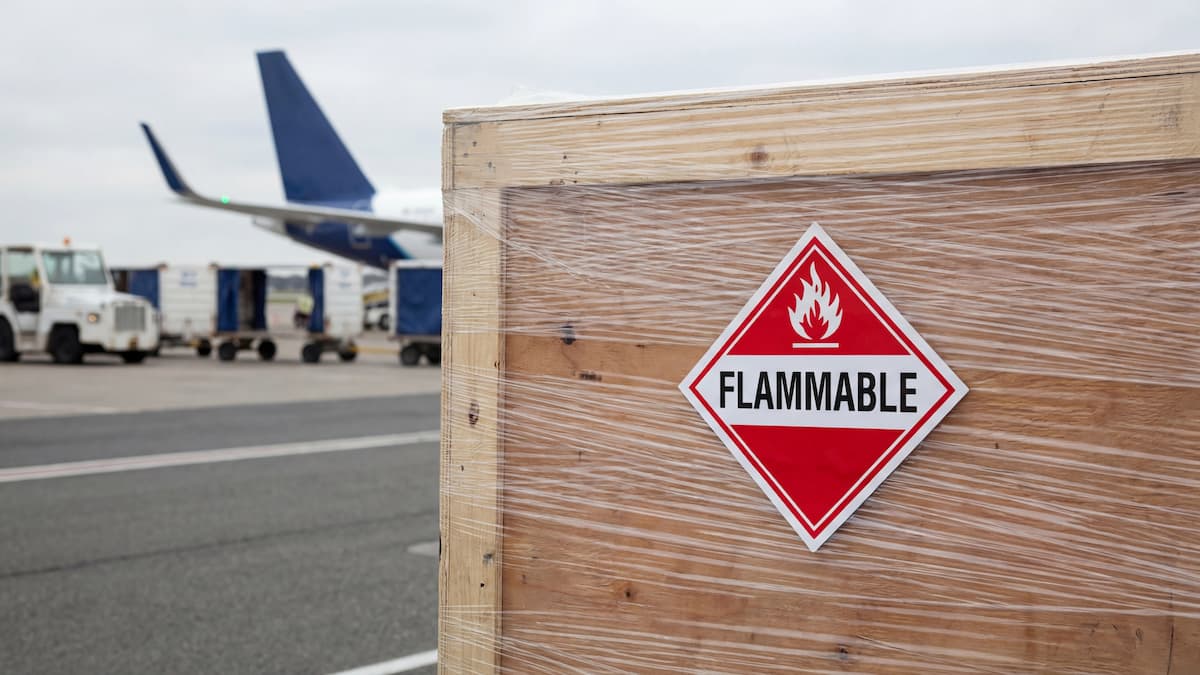
Under 49 CFR 172.400, the Department of Transportation (DOT) and the Pipeline and Hazardous Materials Safety Administration (PHMSA) require that any person offering hazardous materials for transport must properly label the package. Failure to do so results in shipment rejections, significant fines, and potential safety risks for every person handling that package.
But adhering to these regulations doesn’t have to result in lost productivity. Here is how to ensure your DOT labeling strategy supports both regulatory compliance and warehouse efficiency.
The Role of DOT Labels in Safe and Compliant Shipping
English is considered a universal language. DOT labels provide that same standard for transport safety. They provide immediate, visual cues to carriers, emergency responders, and warehouse staff about the contents of a package.
- Labels communicate specific hazards (flammability, toxicity, corrosiveness) to ensure safe handling and storage.
- Proper labeling prevents detained or rejected shipments by carriers due to noncompliance.
- Labels provide financial protection against regulatory penalties for mislabeled hazardous materials can reach tens of thousands of dollars per violation.
While DOT labels are strictly required for hazardous materials, they can also be used voluntarily to represent the hazard of a material even when not specifically mandated, further enhancing safety and visibility.
Choosing Compliant and Scan-Reliable Labels
A label is only effective if it remains legible and affixed from the warehouse to the end destination. In high-volume environments, compliance and functionality go hand-in-hand.
What Makes a Label "Compliant?"
Under DOT regulations, a label must meet specific criteria to be legally valid:
- Classification & Symbols - It must feature the correct hazard class symbol and identifier.
- Durability - Labels must be able to withstand 30 days of exposure to conditions such as weather and friction.
- Placement - Labels must be printed on or permanently affixed to a surface of the package near the proper shipping name marking.
- Legibility - Colors, borders, and text must meet DOT/PHMSA standards for contrast and size.
The Connection Between Hazard Labels and Scan Reliability
While DOT hazard labels primarily serve as visual warnings, they exist alongside your shipping and barcode labels. In a modern Warehouse Management System (WMS), the barcode is the “GPS” of the operation.
When a scanner reads a shipping barcode, it retrieves the product name, weight, and the hazard classification. If the shipping label is smudged, peeling, or poorly printed, the scanner fails. If the DOT hazard label is missing or obscured, the human element of the safety chain breaks. For a shipment to be seamless, both the machine-readable data (barcode) and the human-readable warning (DOT label) must be flawless.
Best Practices for Label Application
Even the highest-quality label will fail if applied incorrectly. Manufacturing and warehouse environments are often dusty, humid, or temperature-variable, all of which challenge the integrity of the adhesive.
The Application Checklist
For high frequency operations using automatic application equipment:
- Acclimate Before Use - Let labels and containers warm up in the same room for 24 hours to prevent wrinkles and contraction. Store labels in a climate controlled environment, (ideally 65-75°F) for 24 to 48 hours for trouble-free processing
- Check Compatibility - Adjust the machine so it matches the product dimensions and label material.
- Load Correctly - It seems obvious, but application problems often start with improper loading, beginning with the unwind direction. Counter-clockwise is the most common.
- Utilize the Most Efficient Roll Size - For longer production runs, use the largest role size to reduce downtime.
When hand applying, keep these steps in mind:
- Acclimate Before Use - In both manual and automated operations, proper acclimation reduces label smudging, wrinkling, curling and detaching.
- Clean Surface - It’s not like a warehouse or packing area will ever get confused with a cleanroom, but minimizing dust and other particles will prevent label failures.
- Apply Pressure - Firmly press and smooth out the entire label. An exposed edge can easily attach to another surface and pull away from the container.
- Apply to a Flat Surface - Applying labels over tight curves or corners can cause "flagging," where the edges lift over time.
- Avoid Seams - When a warning label is applied to a seam, it will still alert the worker, but if the package gets resealed, both the warning and your compliance are lost.
Why Shipping Managers Rely on United Ad Label
Sourcing your labels from a specialist ensures you aren't just buying "stickers," but rather operational tools backed by expertise.
United Ad Label transportation and shipping labels are designed to meet the rigorous demands of 49 CFR, IATA, and Department of Transportation regulations.
- Comprehensive Inventory - Our selection of DOT-compliant labels, including Lithium Battery, Flammable Liquid, Corrosive, and more are in stock and ready for immediate shipment.
- Superior Materials - Our labels are specifically engineered for their end use ensuring they perform effectively.
- Expert Knowledge - We understand the nuances of compliance, helping you select the right materials to avoid fines and delays.
Investing in high-quality, compliant DOT labels from UAL lowers your compliance risks allowing you to deliver the timely shipments your customers expect. Explore our complete line of DOT labels or request a free sample(s) to see how they perform in your operation.
Written by: Gretchen Barrett
Gretchen serves as a Product Manager for United Ad Label. With over 25 years of extensive experience in the shipping and transportation, healthcare and veterinary industries, she specializes in developing solutions that meet rigorous regulatory standards while streamlining workflow efficiencies. Outside of her professional roles, she enjoys reading, attending sporting events and spending time with friends and family.